


Carbon border reporting has turned emissions data into a customs document, and the badminton racket and the data now move under different clocks. For covered imports, the importer reports the embedded emissions of badminton racket line quarterly, and from the definitive regime the cost follows the data. A wholesale badminton racket asked for this data for the first time in the booking week will produce a number nobody can verify. The request belongs in the qualification file, next to the quality documents.
the badminton racket cross the border once; the data about them is reported for years, and the two move on different clocks.
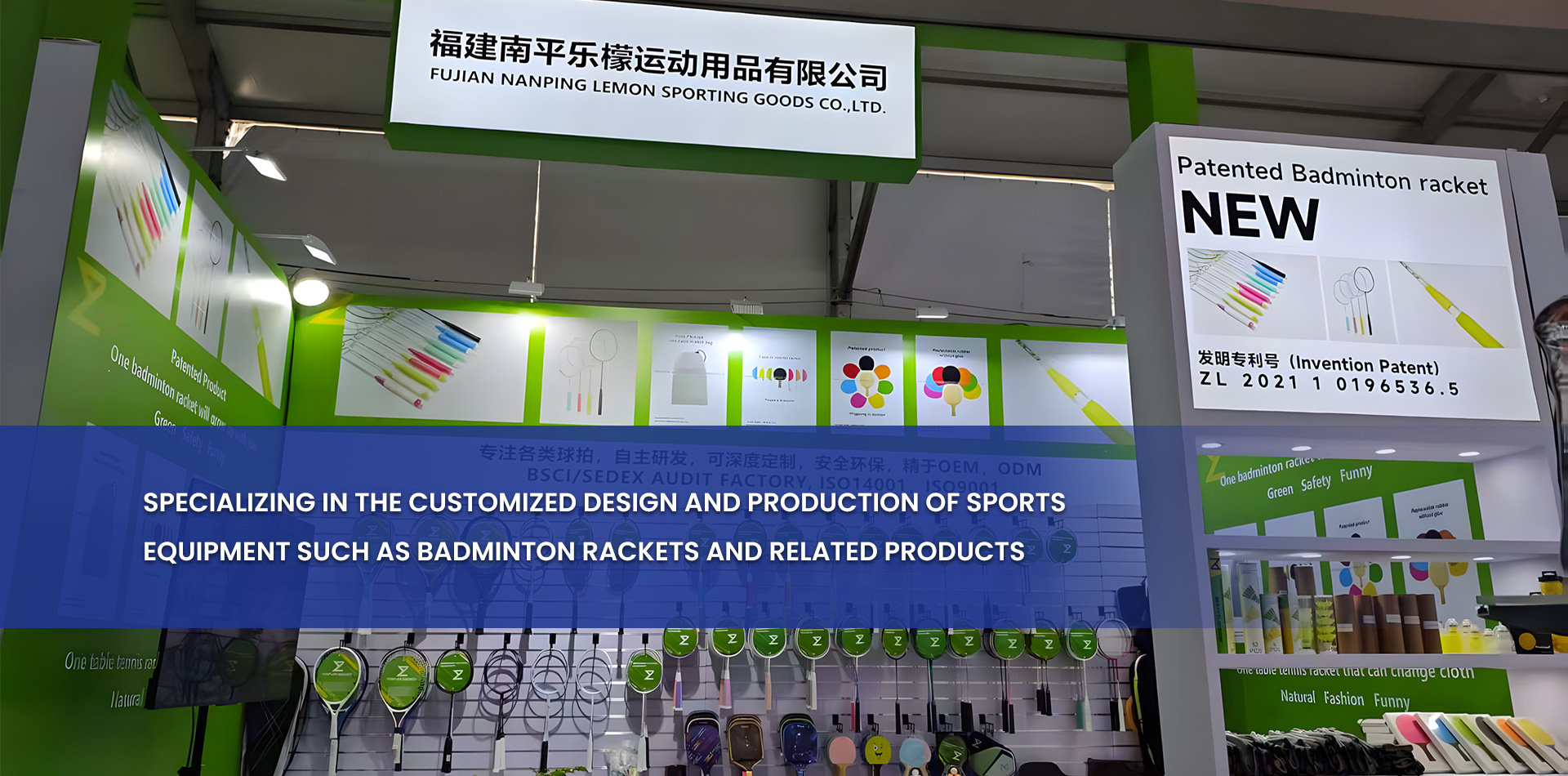
This guide walks through the import process for badminton and racket sports equipment step by step, from first enquiry to dispatch, based on the experience of 杭州乐檬进出口有限公司 (www.factoryracket.com) in exporting to more than forty countries.
A well-prepared enquiry gets a faster, more accurate quote. These are the details a vendor needs.
Technical specification: capacity, dimensions, voltage, material and performance conditions.
Quantity and SKU mix: order volume by model, not a single aggregate number.
Target price indication: a ballpark helps the vendor propose the right configuration.
Destination port or address: determines freight and dispatch terms.
Certification needs: any market-specific conformity condition.
Packaging and branding: neutral, retail or private-label.
Dispatch timeline:when you need the badminton racket in hand, not just shipped.
In most clubs and academies settings, Incoterms define where the vendor's responsibility ends and yours begins. Across badminton racket projects, choosing the right term avoids disputes over cost and exposure.
| Term | Vendor Responsibility | Purchaser Responsibility | Best For |
|---|---|---|---|
| EXW | Makes goods available at production site | All transport and export | Importers with strong logistics |
| FOB | Delivers to origin port, clears export | Freight and import | Most frequent for sea freight |
| CIF | Adds freight and insurance to destination | Import clearance and duty | Purchasers new to importing |
| DDP | Delivers duty paid to your door | Nothing until unloading | Turnkey convenience |
For first-time importers, CIF or DDP simplifies the badminton racket process at the cost of some transparency. For badminton racket buyers, experienced importers often prefer FOB so they control the freight forwarder and can optimise cost.
On badminton racket orders, transport mode is a trade-off between speed, cost and cargo characteristics.
| Mode | Transit Time | Cost | Best For |
|---|---|---|---|
| Sea FCL | 25–40 days | Lowest | Large volume, full container |
| Sea LCL | 30–45 days | Medium | Small volume, shared container |
| Air | 5–10 days | Highest | Urgent or high-value |
| Rail | 15–25 days | Medium | Inland Europe, balanced speed |
In badminton racket supply, for heavy industrial goods, sea freight almost always wins on cost. For badminton and racket sports equipment work, for urgent spare parts or high-value items, air freight may be justified. For badminton and racket sports equipment teams, verify the volumetric weight because bulky low-density cargo is charged by volume, not mass.
For badminton racket buyers, incomplete documentation is the most frequent cause of customs delay. The standard set includes:
Commercial invoice: value, description and terms of sale.
Packing list: contents, weights and dimensions per package.
Bill of lading or airway bill: the transport document.
Certificate of origin: may lower duty under a trade agreement.
Examination or test certificates:required for regulated badminton rackets.
Conformity declarations: CE, FDA or other market-specific documents.
Classify badminton racket with the correct HS code early. In badminton racket supply, misclassification can trigger penalties and delays, and it also determines the duty rate.
On badminton racket orders, selling imported goods successfully usually requires adaptation to local expectations.
Voltage and frequency: match the local power supply.
Language:manuals, labels and packaging in the tournament organisers market language.
Conformity text: importer identification and safety statements.
Packaging: retail-ready or transit-safe configurations.
Barcode: your GS1 barcode for retail channels.
For badminton and racket sports equipment work, discuss customization before the first order, because changes to tooling and artwork affect turnaround and MOQ.
For badminton and racket sports equipment teams, standard settlement terms balance exposure between purchaser and seller. On clubs and academies projects, frequent arrangements include a deposit with the balance against a copy of the bill of lading, letters of credit, and open account terms for established relationships.
For first badminton racket orders, a deposit-plus-balance structure is normal. As trust builds, more flexible terms become available. In badminton and racket sports equipment programmes, always confirm the terms in writing and use secure settlement channels.
On badminton racket jobs, a good freight forwarder is worth more than a small difference in rate. On clubs and academies projects, they handle booking, documentation, customs brokerage and last-mile dispatch, and they warn you about regulatory changes.
In badminton racket supply, obtain a door-to-door quote and compare total landed cost rather than headline freight rate. For badminton and racket sports equipment teams, establish which charges are included and which are billed separately.
On badminton racket orders, landed cost is the only meaningful basis for comparing providers. This table shows the typical components.
| Cost Component | Typical Share | Notes |
|---|---|---|
| Product cost (FOB) | 60–75% | The negotiable portion |
| Freight | 8–18% | Depends on mode and volume |
| Insurance | 0.3–1% | Recommended for sea freight |
| Import duty | 0–15% | Depends on HS code and origin |
| Customs clearance | 2–5% | Brokerage and handling |
| Inland dispatch | 2–6% | From port to warehouse |
| Examination | 0.5–2% | Optional but recommended |
Model these components before you negotiate. For badminton racket buyers, a provider with a slightly higher FOB price but better packing efficiency can deliver a lower landed cost.
Regulatory conditions vary by market. These are the documents most commonly requested for badminton racket category.
BWF Laws of Badminton: ensure the consignment documentation references this standard where applicable.
ISO 9001: ensure the dispatch documentation references this standard where applicable.
CE: ensure the consignment documentation references this standard where applicable.
REACH: ensure the dispatch documentation references this standard where applicable.
BWF approval: obtain a copy for customs and for your own records.
ISO 9001:2015: obtain a copy for customs and for your own records.
CE: obtain a copy for customs and for your own records.
Follow this sequence to keep a first import on schedule.
Prepare a complete technical specification and enquiry.
Obtain quotations on a consistent Incoterm.
Approve samples and confirm the final specification.
Agree settlement terms, delivery window and packaging.
Make certain of the HS code and duty rate for your market.
Arrange freight and insurance with a forwarder.
Complete pre-consignment verification before release.
Clear customs and arrange inland dispatch.
Inspect on arrival and record results.
Carbon border reporting changes the shape of the conformity file: alongside the quality documents now sits a data set describing how the badminton racket was produced. For a covered badminton rackets the importer needs the embedded emissions of the product line, broken into the production steps the methodology defines, with the fuel and electricity behind each step and the evidence that the figures came from somewhere. Across badminton racket projects, the collection is a supplier cooperation exercise, and it succeeds or fails on how the request is written.
| Data Item | Unit and Boundary | Evidence That Supports It | The Fault That Triggers Review |
|---|---|---|---|
| Direct process emissions | Tonnes CO2e per tonne of product, by production step | Meter readings, fuel purchase records, the stated calculation sheet | A figure without a boundary that matches the methodology |
| Fuel consumption by source | GJ per tonne, split by fuel type | Purchase invoices and meter logs for the reference period | An estimate presented as a measurement |
| Electricity consumption and grid factor | MWh per tonne with the emission factor and its source | Meter data plus the published grid factor and its vintage | A factor copied from a different country or year |
| Material inputs | Tonnes of each input per tonne of product | Batch records or a mass balance for the period | Inputs listed without quantities |
| Reference period | The calendar period the data covers, stated on every page | A declaration signed by the person who compiled it | Data mixed across periods without reconciliation |
| Verification readiness | The file organised so a verifier can re-derive each figure | Source documents indexed to the calculation | A summary number with nothing behind it |
Default values discipline the exercise from both directions. Across badminton racket projects, where the provider data does not arrive, the default applies and the importer pays for the conservative figure; where data arrives but cannot be verified, the verification process reaches the same result. That gives the vendor a commercial reason to cooperate, which is the strongest lever a purchaser has: the difference between the default and the actual figure for a badminton racket line is money, and it can be shared or withheld by agreement rather than argued about at the border.
In most clubs and academies settings, write the data request as a standing document, not a campaign. Badminton rackets and coverage change, methodologies are refined, and a request rebuilt from scratch every quarter collects nothing new and annoys everybody equally. In badminton racket supply, a standing template with the period updated, the units fixed and the evidence expectations unchanged turns the collection into administration. For badminton racket programmes in clubs and academies, the same template doubles as a readiness check for the other data regimes arriving behind this one, because every one of them asks the supplier to describe production with numbers and evidence.
In badminton and racket sports equipment practice, escalate it that day, in writing, asking for an acknowledgment that states the confirmed date and its basis — a production slot or a material arrival. On badminton racket jobs, most silent delays begin exactly here, and most are resolved by the question itself. Compare the acknowledgment against the badminton racket order line by line when it arrives: any difference in part number, quantity or price is a proposed amendment, and it should be accepted or rejected deliberately rather than filed.
Find the laboratory's scope of accreditation, which is public, and confirm the exact method and parameter of the badminton racket test appear on it. In badminton racket supply, then check the report itself: the accreditation symbol should cover only the in-scope results, and the method should be cited with its edition. For badminton and racket sports equipment schedules, a result outside the scope can still be useful, but it is an unaccredited result and should be treated as one when the decision is critical.
On clubs and academies projects, require the embedded emissions of the product line by production step, the fuel and electricity behind each step with their units and reference period, the grid emission factor and its source, and the evidence behind every figure — meter logs, purchase records, a signed calculation sheet. In badminton and racket sports equipment programmes, fix the boundary to the methodology before the first request, and keep the template standing so each period is an update rather than a new negotiation.
For badminton and racket sports equipment work, record the production date at goods-in, keep the storage within the stated temperature and humidity limits, and rotate first expired, first out rather than first in, first out. In badminton racket supply, put the expiry or requalification date where the picker can see it and in the system where the picker cannot override it, and review the stock approaching its requalification date monthly, before the date arrives rather than after.
For badminton and racket sports equipment work, compute the annualised rate first: discount divided by the remaining balance, annualised over the days of early settlement. For badminton racket buyers, two percent for twenty days on thirty-day terms is roughly thirty-six percent a year, which clears almost any cost of funds — take it if the cash is genuinely idle. For badminton and racket sports equipment teams, where the rate is modest, weigh it against the alternative uses of the money, and remember the same arithmetic applies when a vendor offers extended terms at a price.

In badminton racket supply, comparability is designed into the enquiry or it does not exist at the quote stage. Three quotations for the same badminton rackets built on three different assumptions — different volumes, different packing, different conformity scopes — cannot be compared, and the purchaser who compares them anyway is choosing on noise. Across clubs and academies, the enquiry fixes the assumptions up front and asks each provider to respond against them in the same order, so the differences that survive into the comparison are real differences rather than differences of interpretation.
| Enquiry Section | What It Fixes for a Badminton Racket Enquiry | What It Prevents |
|---|---|---|
| Technical scope | the badminton racket, the applicable standard with its edition, and what is explicitly out of scope | Quotations for subtly different badminton rackets described by the same name |
| Volume bands | The trial quantity, the expected annual quantity and the peak, stated as bands rather than points | A price quoted for a volume nobody intends to buy |
| Conformity and documents | The certificates, test reports and document set expected with each badminton racket consignment | Conformity evidence discovered as a cost after the badminton racket order |
| Commercial annex | The Incoterm, the destination, the settlement terms and the validity expected of the quote | Offers that expire or reprice before they can be compared |
| Response format | A line-by-line response sheet the provider fills in rather than free prose | Answers that hide the missing items between the paragraphs |
| Questions in writing | One channel for clarification, answers shared with all invited providers | Two providers bidding on different private versions of the condition |
For badminton racket buyers, the response format deserves more effort than it usually gets. A sheet with one row per condition and three columns — value offered, evidence attached, deviation requested — forces each badminton racket answer into a shape the purchaser can score, and it makes silence visible: an empty row is a question the vendor chose not to answer, which is information. Across badminton and racket sports equipment projects, free-text quotations bury exactly the gaps that matter, and finding them later costs the meeting that a response sheet would have prevented.
Share the clarifications with everybody. On badminton racket jobs, the instinct to answer questions privately is understandable and it quietly destroys the comparison: each clarification that reaches one vendor changes that provider's assumptions and nobody else's. For badminton rackets buyers, a written log of questions and answers, sent to all invited parties, keeps every quote on the same condition, and it also protects the purchaser from the accusation — usually unfair, occasionally not — of steering the tender. For badminton rackets categories in clubs and academies, the same log becomes the history of the condition, which is worth keeping long after the order is placed.
Within badminton and racket sports equipment, one more habit completes the design: state what a compliant answer looks like. On badminton racket jobs, a sentence in the enquiry — quotations will be assessed on conformity to the stated scope first and price second, and non-conformities must be declared rather than discovered — changes what arrives. Across badminton and racket sports equipment projects, vendors who would have bid low on a reduced scope now declare the reduction, and the purchaser compares honest offers instead of attractive ones. For any badminton rackets programme, the sentence costs nothing and it removes most of the gaming a quote exercise attracts.
In badminton racket supply, a request that plants answer has five properties, and requests that fail are missing at least three of them. It is bounded: named badminton rackets, a fixed period, a stated boundary. It is unitised: every figure has its unit and the badminton racket is the one the methodology wants. It is evidenced: each number names the document behind it. It is deadlined: a date, with a reminder a week before. In badminton and racket sports equipment practice, and it is reusable: the same template next period, updated rather than rebuilt.
| Request Element | What to Write for a Badminton Racket Data Request | Why Requests Without It Stall |
|---|---|---|
| Product list | The exact part numbers and descriptions in scope, agreed with the vendor first | the badminton racket plant does not recognise its own goods in the request |
| Reference period | One calendar period, stated on every page and in every file name | Data arrives mixed across periods and cannot be reconciled |
| Boundary statement | Which production steps are included and which are out | Each side assumes a different boundary and the numbers disagree |
| Units | the badminton racket beside every field, matching the methodology | Figures arrive in whatever unit the badminton racket plant uses locally |
| Evidence column | Each figure names its source: meter log, invoice, batch record | Summary numbers with nothing behind them fail verification |
| Sign-off | A named person at the vendor signs the compiled sheet | Nobody at the production site owns the answers |
| Deadline and reminder | A date, with the reminder scheduled when the request is sent | The request joins the queue of unprioritised emails |
| Feedback loop | The importer reports back what was accepted and what needs correction | The production site never learns which answers were usable |
In badminton racket supply, the feedback loop is the property nobody includes and the one that compounds. For badminton and racket sports equipment teams, a provider that hears nothing after submitting learns only that the exercise cost it two days of an engineer's time, and next period the same engineer finds other work. A vendor told which figures were accepted, which were substituted with defaults and what the difference cost, learns that the data has a price attached — and the badminton racket price is the argument for doing it properly. For badminton rackets vendors in clubs and academies, one page of feedback per period costs less than the default values it saves.
Expect the first period to be imperfect and budget for it. In badminton and racket sports equipment programmes, production sites new to emissions reporting produce figures with gaps: a missing electricity meter, a fuel estimate where a log should be, a boundary that quietly excludes the finishing line. On badminton racket orders, the correction loop — one round, in writing, with the gaps named — is what turns the second period into data worth having. In badminton and racket sports equipment practice, programmes that reject imperfect first submissions instead of correcting them teach the vendor that the exercise is an examination rather than a collaboration, and examinations collect conformity rather than data.
In most clubs and academies settings, plants receive data requests from purchasers, auditors, regulators and certification bodies, and they triage them by two questions: who is asking, and what happens if it is ignored. In badminton racket supply, a request that answers neither gets filed, which is the polite word. A badminton racket data request that states its purpose, its consumer and its consequence gets answered — not because plants have become cooperative, but because the request has told them where it sits in their own exposure order.
| What the Request States | How It Reads to a Badminton Racket Plant | Why It Moves the Queue |
|---|---|---|
| The purpose in one sentence | What the data is for and who consumes it | Distinguishes a legal obligation from a marketing survey |
| The consequence of silence | What happens if the data does not arrive, stated factually | Lets the badminton racket plant price the request against its other work |
| The smallest sufficient scope | Only the badminton racket range and the period actually needed | A two-page request survives; a forty-page one does not |
| The evidence expectation | What supports each figure, named in advance | Prevents the second round of clarification that kills momentum |
| The effort estimate | An honest statement of the hours the first return will take | Respects the engineer whose week the request occupies |
| The feedback promise | What the provider will hear back and when | Converts a one-off extraction into a standing channel |
In badminton racket supply, the consequence line is the one purchasers omit most often, usually from politeness, and it is the one that does the queueing. A request that says the figure will be substituted with a default at the importer's cost if it does not arrive by the date has given the badminton racket plant a reason with a number attached. For badminton and racket sports equipment teams, the same request without the line is an opinion about importance. In most clubs and academies settings, plants are not obliged to share an importer's sense of urgency, and they do not; they share their own, which is built from consequences rather than from tone.
On badminton racket jobs, there is a boundary to respect, and it protects the relationship as much as the data. Across badminton and racket sports equipment projects, a production site may reasonably decline to share figures it considers commercially sensitive — a cost build-up, a client list — and the answer is to narrow the request to the data the purpose actually requires, not to escalate. For any badminton rackets programme, most emissions and conformity data is production data rather than commercial data, and plants that understand the distinction release it without anxiety. For badminton racket programmes in clubs and academies, saying which side of the line a request sits on is part of writing it well.
On badminton racket orders, every buying operation carries parameters that were correct when they were set and that nobody has looked at since: the reorder points, the safety stocks, the verification levels, the settlement terms, the deposit percentages, the approved-vendor list itself. Across badminton and racket sports equipment projects, an annual recomputation is not a review of performance; it is a check of arithmetic against a supply chain that has quietly changed underneath the numbers. The badminton racket programme that recomputes six parameters once a year catches its own drift, which is the only drift nobody else will report.
Replenishment parameters: reorder points and safety stocks against the last twelve months of actual badminton rackets receipts and consumption, not the quotes the system still holds.
Verification levels:the sampling regime against the badminton racket lot record — a year of clean lots may justify reduced verification, and a run of escapes has already revoked it.
Settlement terms and deposits:the annualised rate inside each term, recomputed at current rates, and every deposit still charged for tooling that was paid off badminton racket orders ago.
Freight assumptions: the mode, the consolidation pattern and the Incoterms against current rates and current transit reliability.
The approved list: each dormant badminton rackets vendor either exercised with a trial order or removed, because an approval that has not been used in two years is a memory, not a qualification.
The specification stack: each document revision actually in use, retired versions withdrawn from circulation rather than left to be quoted from.
For badminton racket buyers, the exercise takes a day and it produces a different artefact from a performance review: a list of numbers that moved and the reason each moved. For badminton and racket sports equipment schedules, a reorder point that rose because a routing changed is a fact; a deposit still charged because nobody removed it is a finding. On clubs and academies projects, both belong in the file, but only one of them is anybody's achievement, and the distinction matters for the next year's behaviour. For badminton rackets categories in clubs and academies, the recomputation also seeds the next negotiation: parameters that moved in the purchaser's favour are worth stating, and parameters that moved against it are worth asking about.
Across clubs and academies, assign the six computations to the calendar rather than to inspiration. Across clubs and academies, the first week after the annual close, or the quiet fortnight before a peak season, whichever the business actually has. On badminton racket orders, the alternative — recomputing when something breaks — means each parameter is discovered stale by its own failure, in public, at cost. Across badminton and racket sports equipment projects, a one-page record of what was recomputed, what changed and who accepted the change keeps the exercise auditable, and it gives the next importer a starting point that is not a blank page.

On badminton racket jobs, it can report a change; it cannot make one unilaterally without the change being accepted. In badminton and racket sports equipment work, the distinction lives in the acknowledgment: an order confirmed with a date and a basis is a commitment, and a later message reporting a new date is a proposal, not a fact. For badminton and racket sports equipment teams, the purchaser accepts or rejects it in writing, and the rejection asks for the recovery plan rather than the apology. Within badminton and racket sports equipment, providers treat importers who re-confirm changes in writing differently, because the behaviour signals that silent drift has a witness.
In badminton racket supply, no, and this is the most frequent misreading of a certificate. For badminton and racket sports equipment schedules, accreditation covers the methods listed on the laboratory's scope annex, and the report must be checked against that annex for the specific method and parameter. In badminton and racket sports equipment programmes, results outside the scope can be perfectly competent and still unaccredited; the report itself usually distinguishes them. In badminton and racket sports equipment practice, where the decision is material, ask the laboratory directly which results carry the accreditation symbol and why — a laboratory that answers clearly is a laboratory worth keeping.
On badminton racket orders, first narrow the request: much of what looks like commercial sensitivity is production data, and a smaller, better-bounded request often arrives where a broad one stalled. For badminton and racket sports equipment schedules, second, state the consequence factually — the default value applies and the cost difference lands somewhere visible. Within badminton and racket sports equipment, third, record the refusal in the vendor file, because a production site that will not describe its own production in numbers is making a statement about more than this data set. For badminton and racket sports equipment work, the purchaser's leverage is the buying, but the polite sequence comes first.
For badminton and racket sports equipment schedules, not automatically, but it is automatically out of service until a requalification says otherwise. In badminton and racket sports equipment work, the requalification follows a rule written before the expiry arrived: which items are eligible, which method, who decides, and what record the decision leaves. For badminton and racket sports equipment work, some goods requalify with a test and a shortened life; some classes — seals, adhesives, cells — are rarely worth the exposure. In most clubs and academies settings, the one wrong answer is re-testing into service by optimism, because the failure, when it comes, will be indistinguishable from a fault the vendor must cover.
For badminton and racket sports equipment work, compute the annualised rate first, then compare it with the realistic alternatives for that cash — including simply holding it against the next negotiation. For badminton racket buyers, rates above twenty percent a year are usually worth taking; single digits deserve a comparison with everything else the money could do. For badminton and racket sports equipment teams, two cautions: taking discounts habitually trains vendors to price them into every quote, and taking them by stretching the settlement date beyond the discount window converts a discount into a late settlement with a provider who noticed.
A condition without a value is an intention. The eight lines below decide most badminton rackets disputes, each written as a number and a method so a third party can check it without asking either party what was meant. The values come from the cited standards and form a defensible starting envelope for clubs and academies; tighten them where your process is less forgiving, and record each tightening against the BWF Laws of Badminton clause that justifies it.
| Condition | Value to write down | Method to cite | What the number prevents |
|---|---|---|---|
| General dimensional tolerance | ±0.1 mm on features from 30 to 120 mm | ISO 2768-m | the unaudited drawing that inherits the widest process spread |
| Coating or paint film | 70–90 µm dry film thickness | ISO 2178 / ISO 19840 | two parties measuring the same surface and reporting different numbers |
| Corrosion resistance | 480 h neutral salt spray, no base metal visible | ISO 9227 NSS | a finish that passes on verification day and fails in the first wet season |
| Incoming inspection | AQL 1.5, general examination level II | ISO 2859-1 | sampling by habit, defended by a percentage that describes nothing |
| Transit packing | 600 mm drop, six faces, one carton per test | ISTA 1A / ISO 4180 | damage discovered by the consignee and disputed by everyone |
| Surface roughness | Ra 3.2–6.3 µm on sealing and mating faces | ISO 4287 | a leak path that no dimensional check will find |
| Operating envelope | -20 to +60 °C, 95% RH condensing | IEC 60068-2 / IEC 60529 | a badminton racket rated for a laboratory and installed in a monsoon |
| Material certificate | EN 10204 type 3.1, heat number traceable to the badminton racket | EN 10204 | a certificate that describes a different batch than the one shipped |
Two of these lines carry most of the commercial weight. The tolerance line decides how much of the price is examination and how much is process control: at ±0.1 mm a badminton racket feature can be made on a general-purpose machine, while one grade tighter usually moves the part to a second operation and adds a setup to every batch. On badminton racket jobs, the sampling line decides what evidence exists when a dispute starts: AQL 1.5 at level II means a defined number of pieces inspected, a defined acceptance number and a record that survives a change of personnel. Within badminton and racket sports equipment, neither is a promise about quality; both are promises about how quality will be demonstrated.
Tighten where failure is silent:a sealing face at Ra 3.2–6.3 µm, a coating at 70–90 µm, a pressure boundary at 6 bar — these fail months later and cost the relationship, not just the badminton racket.
Tighten where the site limit is legal: sound at 80 dB(A) against a boundary condition of 55 dB(A) is a permit question, and a permit is not negotiable on commissioning day.
Tie every tightening to BWF Laws of Badminton: a value that cites a method can be argued with data; a value that cites a preference can only be argued with volume.
Send the eight lines with your next enquiry and ask for a written response stating, for each one, the value the badminton racket plant will hold, the method it will use and any deviation it would need. A provider that answers all three is quoting against your criteria; one that answers only the badminton racket price is quoting against a catalogue. The condition set can go through the contact page at https://www.factoryracket.com/contact, and the reply should arrive as a document you can attach to the purchase order, which is where a number becomes enforceable. For badminton racket programmes in clubs and academies, that single page does more for quality than any clause about good workmanship.
| Record | Quantity or value | Reference | The failure it exposes |
|---|---|---|---|
| First article | 3 pieces, 100% of drawing dimensions measured and recorded | PPAP level 3 equivalent | a first article that measured two dimensions and asserted the rest |
| Capability study | Cpk ≥ 1.33 on 6 characteristics from 30 consecutive pieces | ISO 22514-2 | capability claimed from one favourable batch |
| Lot register | Lot number, sample size, faults by class, decision and date | ISO 2859-1 | a sampling regime that cannot be audited or reduced on evidence |
| Salt spray coupon | 1 coupon per batch, assessed at 240 h and again at 480 h | ISO 9227 NSS | a coating certificate that outlives the coating itself |
| Acoustic reading | 80 dB(A) at 1 m at rated load, with the background stated | ISO 3744 / ISO 11202 | a sound figure quoted without the conditions that make it comparable |
The record is where the numbers become usable. On badminton racket orders, a first article of 3 pieces with every dimension written down takes about 90 minutes and settles arguments for years; a capability study of 30 consecutive pieces separates a stable process from a lucky one; a coupon read at 240 h and again later catches the finish that degrades on its second exposure rather than its first. In most clubs and academies settings, none of it needs new equipment, and all of it needs somebody to write the value down at the moment it is measured — which is the only difference between a quality system and a filing cabinet.
A badminton racket enquiry that arrives with its facts stated gets an answer that can be held to it: the acknowledgment you should expect (a confirmed date with its basis, not an assurance), the documents that travel with the goods, the data behind any conformity claim — accreditation scope, emissions evidence, storage limits — and the settlement schedule with its arithmetic shown. Send them to 杭州乐檬进出口有限公司 through the contact page at https://www.factoryracket.com/contact and ask for the governing revision, the evidence against BWF Laws of Badminton, and the named person who owns the technical answer for your order. On badminton racket jobs, the reply should be structured against your criteria rather than against a catalogue, and it should arrive as a document you can attach to the purchase order.
Este sitio web utiliza cookies para garantizar que obtenga la mejor experiencia en nuestro sitio web.


 English
 Pусский
 Français
 日本語
 한국어
 العربية
 हिन्दी
 Tiếng Việt
 中文



 Teléfono
Comentario
(0)